A process, not a random to-do list
Wedding planning checklist: decisions in the right order
Wedding planning gets easier when every task has an owner, a deadline, and a reason it must happen before something else. This checklist groups the work into operating lanes so decisions stop getting lost across messages, notes, and vendor portals.
What this page recommends
Run the plan through six lanes: scope and authority, venue and vendor contracts, guest management, design and attire, money and payments, and wedding-week operations. Review all six lanes together once a week so a change in one lane is reflected everywhere else.
Recommended tool: Wedding Checklist PDF — $9
Build one operating plan
Use one master list with the task, owner, due date, status, dependency, cost, and link to the controlling document. Separate ideas from commitments: a saved inspiration image is not a vendor booking, and a verbal quote is not a contracted price.
- ✓ Task and desired output
- ✓ One accountable owner
- ✓ Real due date
- ✓ Dependency or blocker
- ✓ Contract, file, or source link
Review by workstream, not by mood
A weekly review should scan each workstream for missing decisions, late deposits, unanswered vendor questions, guest changes, and handoff risks. This is more reliable than working only on whatever feels urgent that day.
- ✓ Scope and decision authority
- ✓ Venue and vendors
- ✓ Guests and hospitality
- ✓ Design, attire, and rentals
- ✓ Budget, contracts, and payments
- ✓ Timeline, setup, and emergency handoff
Close decisions cleanly
Every decision should end with a documented selection, the reason, the cost or constraint, who was notified, and what downstream task changed. Clean closure prevents the same debate from reopening and stops multiple versions from circulating.
- ✓ Record the final choice
- ✓ Update the budget and timeline
- ✓ Notify affected people
- ✓ Archive superseded versions
- ✓ Set the next review date
Working view
| Workstream | Weekly review question | Proof of completion |
|---|---|---|
| Venue/vendors | What is unbooked, unsigned, or unanswered? | Signed agreement and payment record |
| Guests | Which count, meal, travel, or accessibility inputs changed? | Updated guest source of truth |
| Design/attire | Which choices affect orders, rentals, or setup? | Approved specification and owner |
| Money | What is due next and what changed? | Updated cash-flow and balance record |
| Operations | What must be handed off and to whom? | Acknowledged final packet |
Look inside the paid files
Real previews from Wedding Checklist PDF
These are flattened, watermarked images generated from the canonical paid PDF and XLSX release. They show the real structure without exposing an editable template.
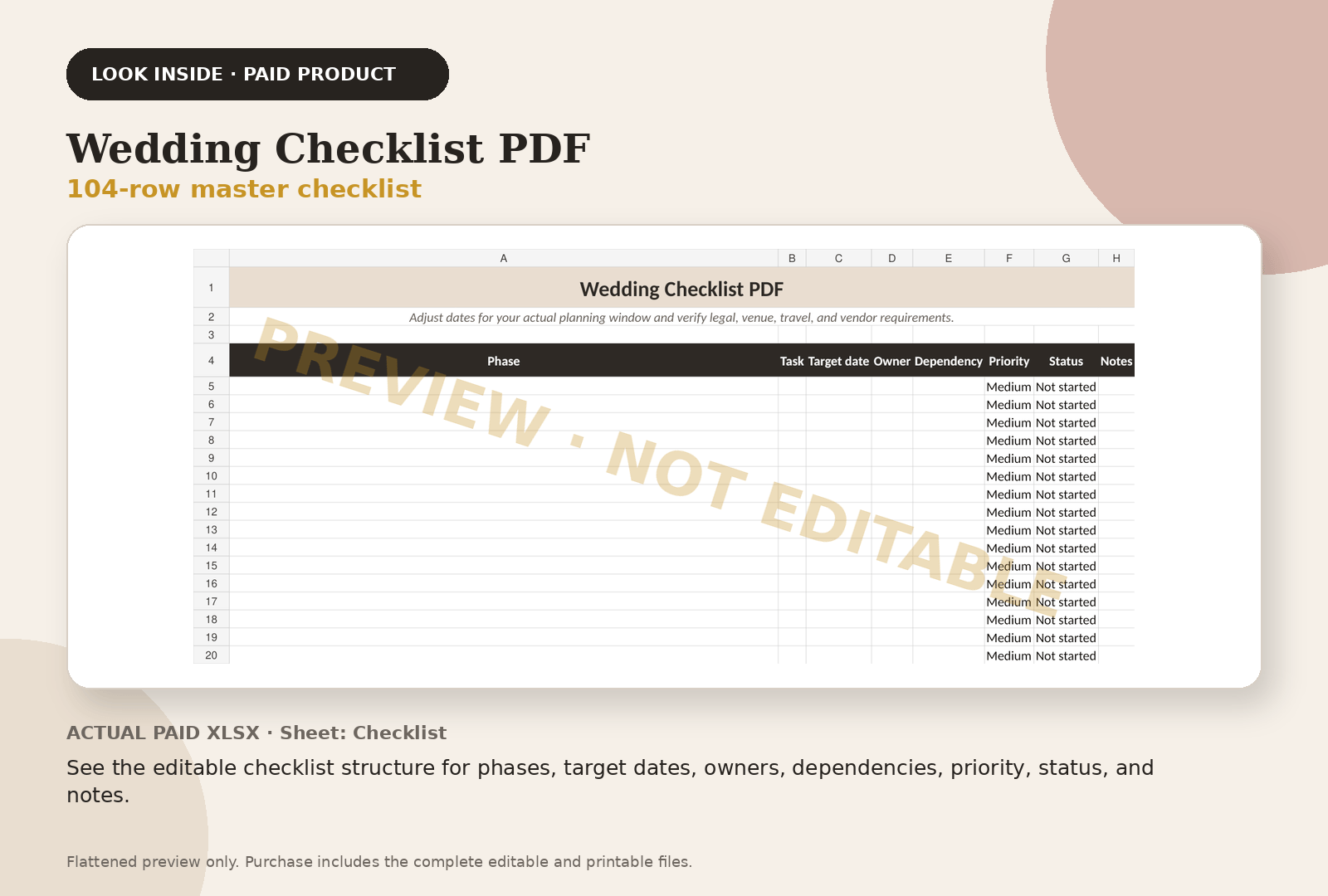
See the editable checklist structure for phases, target dates, owners, dependencies, priority, status, and notes.
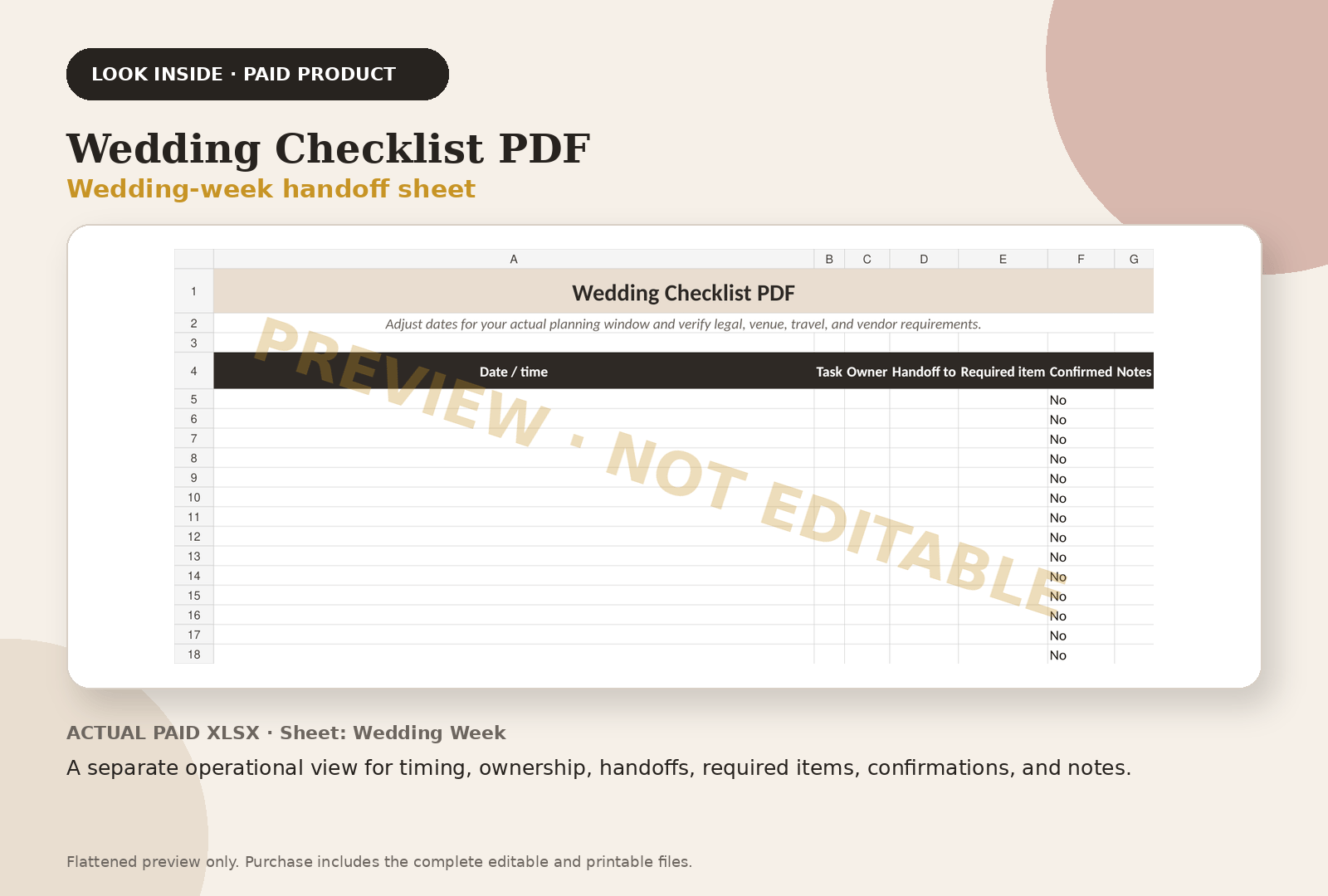
A separate operational view for timing, ownership, handoffs, required items, confirmations, and notes.
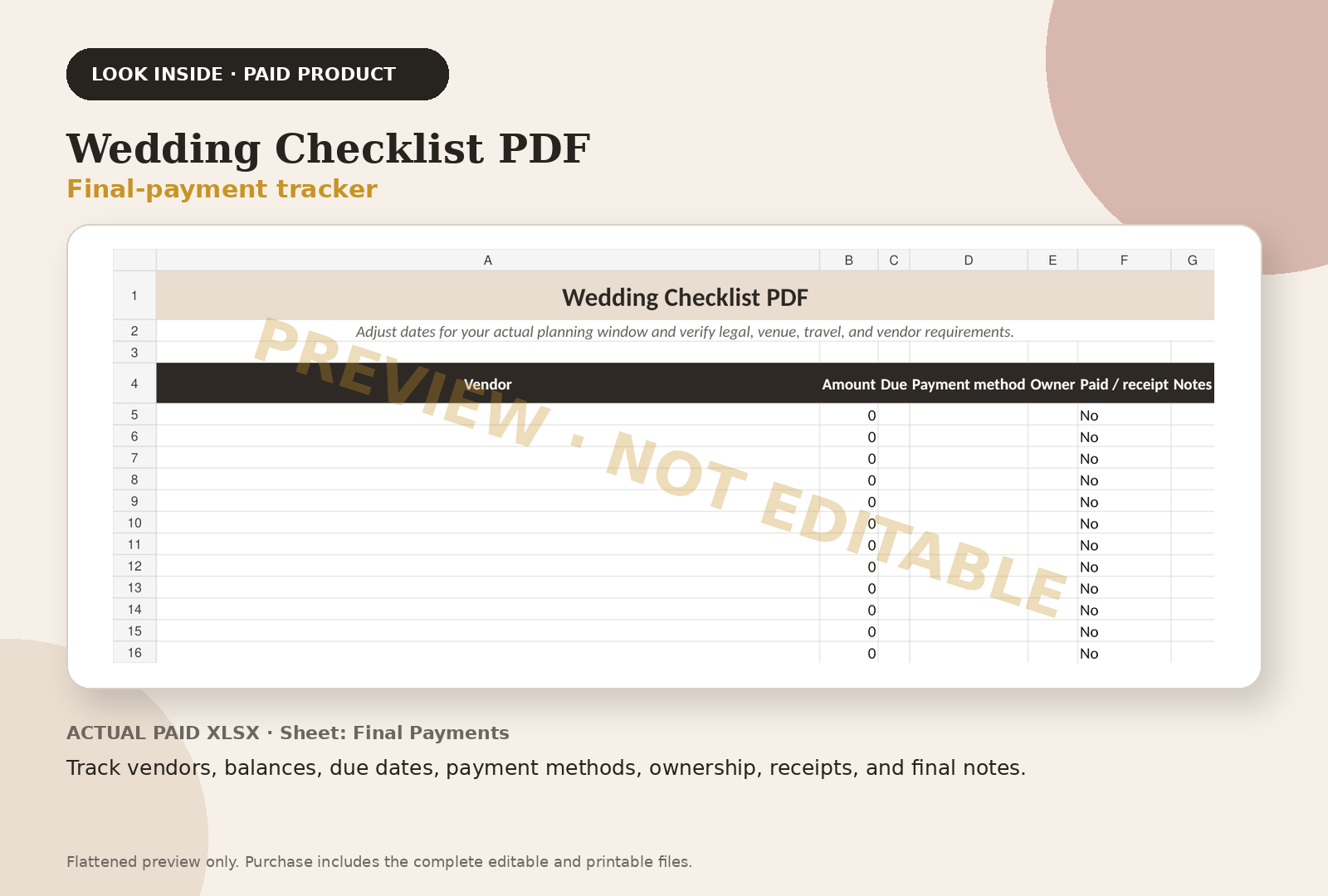
Track vendors, balances, due dates, payment methods, ownership, receipts, and final notes.
Questions couples ask
Frequently asked questions
How do I organize a wedding planning checklist?
Organize by workstream and dependency, then add an owner, due date, status, and controlling link to every task.
How often should we review the wedding plan?
A weekly review is usually frequent enough during the main planning period. Increase the cadence in the final month or whenever multiple vendor deadlines converge.
Who should own wedding planning tasks?
Assign one accountable owner even when several people help. Shared ownership without one final owner is a common reason tasks remain unresolved.
Continue with the working system
Wedding Checklist PDF
This educational guide explains the method. The product page shows the actual paid-file previews, exact file inventory, and checkout path.
Review Wedding Checklist PDF — $9Keep planning